Invisalign vs. Braces: Which Is Right for You in San Antonio?
Invisalign is usually the better choice for mild to moderate alignment issues when discretion and convenience matter, while traditional braces handle complex bite problems and severe crowding more predictably. Both typically take 12 to 24 months and cost in a similar range — roughly $3,000 to $8,000 depending on complexity. The deciding factor is usually your specific case and how you want to live during treatment. At Terrell Hills Dental, both options are overseen by Dr. D’Avanzo, a board-certified orthodontist, which means you get specialist-level planning either way.
Here’s an honest comparison to help you decide.
How Does Invisalign Work?
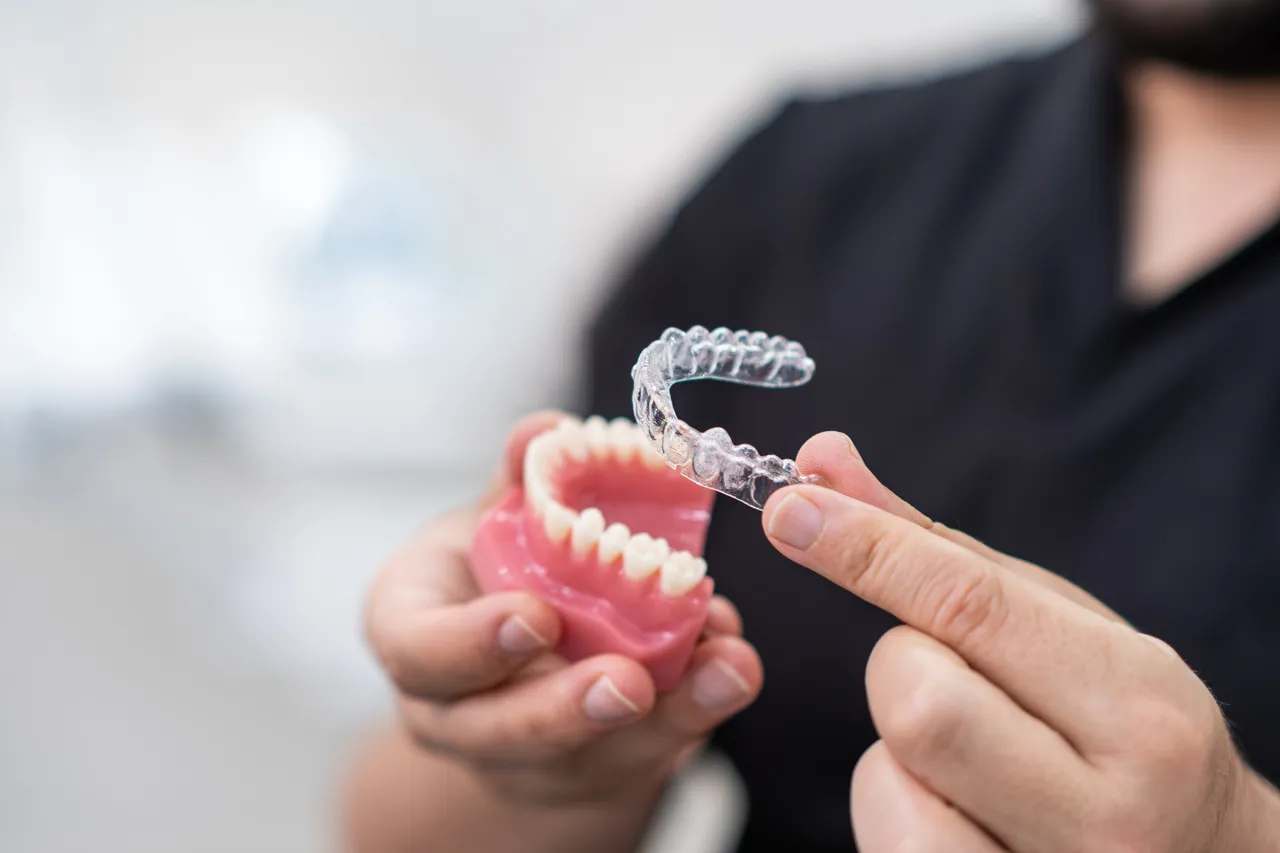
Invisalign uses a series of custom clear aligners that shift your teeth gradually. You wear each set for about one to two weeks, 20 to 22 hours a day, removing them to eat, brush, and floss. Treatment is planned digitally from the start using iTero scanning, so you can preview your projected result before you begin.
- Nearly invisible — most people won’t notice you’re in treatment
- Removable — no food restrictions and normal brushing and flossing
- Fewer office visits — check-ins are typically less frequent than with braces
- Requires discipline — results depend entirely on wearing them as directed
How Do Traditional Braces Work?
Traditional braces use brackets bonded to your teeth connected by wires, adjusted periodically to guide teeth into position. Modern braces are considerably smaller and more comfortable than older versions, and they remain the most predictable tool for difficult cases.
- Handle complex cases — severe crowding, rotations, and significant bite correction
- No compliance required — they work continuously because they can’t be removed
- Visible — though clear and ceramic bracket options reduce this
- Food restrictions — hard and sticky foods need to be avoided
Which Works Faster?
Treatment time depends far more on your case than on the method. Both typically run 12 to 24 months, with simple cases finishing sooner and complex ones taking longer. Invisalign can be faster for mild crowding or spacing; braces often move more efficiently in cases involving significant rotation or bite correction. The honest answer is that whichever tool fits your case best will also finish fastest.
Which Costs More?
The two are closer in price than most people expect — generally $3,000 to $8,000 depending on how much movement is needed. Many dental plans include orthodontic benefits that apply to both options equally. We verify your coverage in advance and offer flexible financing through CareCredit, Cherry, Sunbit, Alphaeon Credit, and United Credit, with payment plans up to $25,000. Cost is rarely the deciding factor between the two.
Which Is More Comfortable?
Both cause some pressure and soreness as teeth move, particularly in the first few days after a change. Invisalign tends to feel gentler because there are no brackets or wires to irritate cheeks and lips, and the forces are more gradual. Braces can cause occasional poking or irritation, though orthodontic wax handles most of it. Neither is painful in any lasting sense.
Which Should I Choose?
Invisalign is likely your best fit if:
- Your alignment issues are mild to moderate
- You want treatment that isn’t obvious at work or in photos
- You’ll reliably wear aligners 20 to 22 hours a day
- You want to keep eating and cleaning your teeth normally
Traditional braces are likely the better choice if:
- You have severe crowding, significant rotation, or a complex bite issue such as an underbite
- You’d rather not rely on remembering to wear something
- You’re treating a child or teen who may not keep up with aligners
- Your case needs the precise control brackets and wires provide
A consultation settles this quickly. We evaluate your bite with digital scanning and tell you honestly which option will give you the best result — and if both would work equally well, the choice is simply yours. Explore all our orthodontic options.
What Happens After Treatment?
Both options require retainers afterward, and this part matters more than most patients expect — teeth naturally drift back without them. Wearing your retainer as directed is what protects the investment you just made. Our guide on maintaining your smile after Invisalign covers long-term retention in detail.
The Bottom Line for San Antonio Patients
Invisalign and braces both work. Invisalign wins on discretion and convenience for mild to moderate cases; braces win on predictability for complex ones. Costs and timelines are broadly comparable. What matters most is having a specialist evaluate your specific bite — because the right tool for your case is the one that gets you the best result.
Straighten Your Smile in San Antonio, TX
Dr. D’Avanzo, a board-certified orthodontist, provides both Invisalign and traditional braces at Terrell Hills Dental, with digital scanning for precise planning. We proudly serve San Antonio, Terrell Hills, Alamo Heights, Fort Sam Houston, Windcrest, Converse, and Live Oak.
To find out which option fits your smile, request an appointment online or call (210) 824-3531.