
Ridge Augmentation for Dental Implants in San Antonio
If you have been told that your jawbone has lost enough shape or volume to support dental implants, the ridge augmentation dental San Antonio patients trust from Terrell Hills Dental can help. We accept many major dental insurance plans, and Dr. Emad Abdallah brings advanced Implant Mastery training with over 100 hours of continuing education to every procedure. This combination of patient-centered planning and expert skill means you can move forward with confidence.
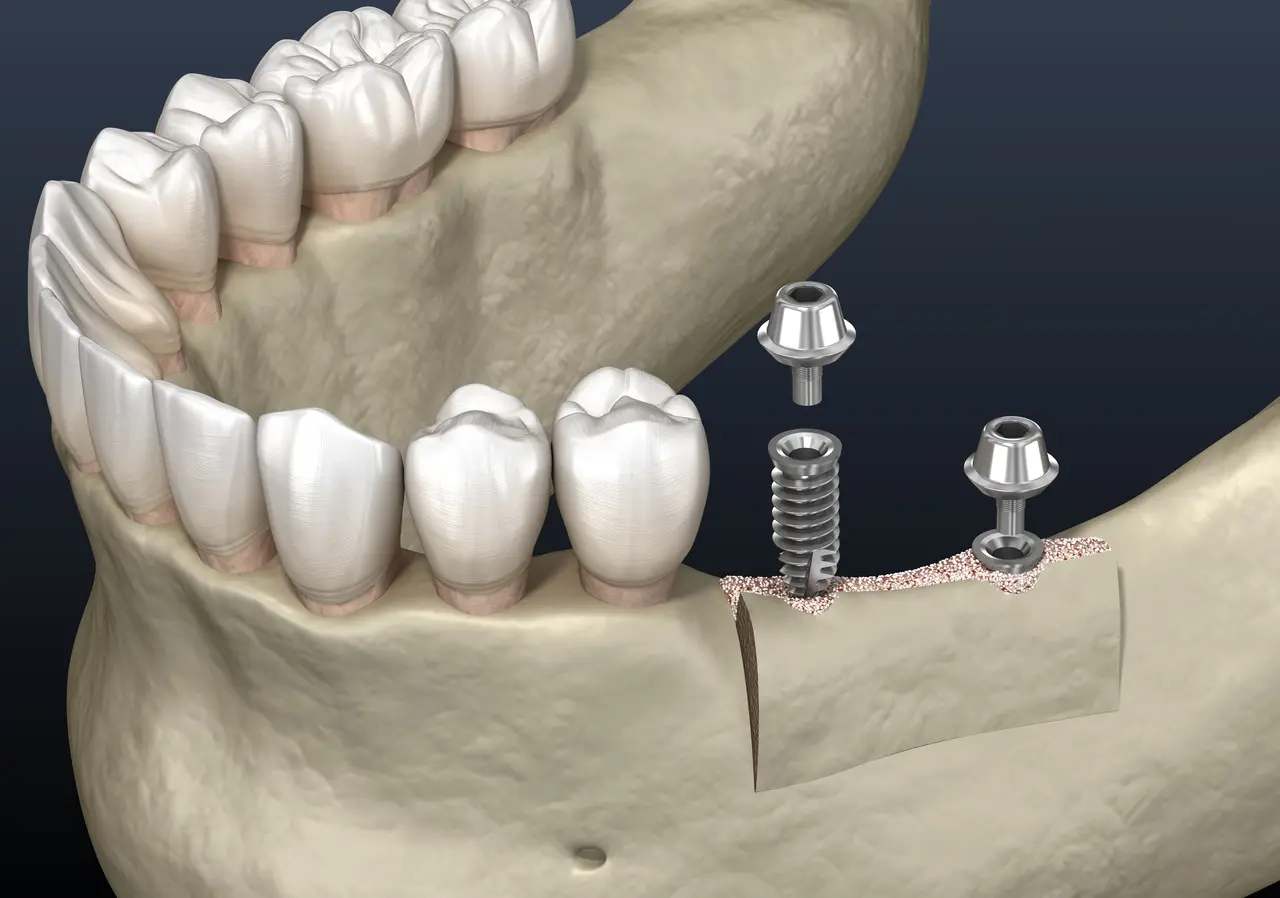
What Is Ridge Augmentation and Why Is It Needed?
Ridge augmentation is a procedure that rebuilds the jawbone ridge — the curved bone that once held your teeth — so it has the width and height needed for a secure dental implant. Over time, after a tooth is lost or extracted, the bone that supported it can resorb, or shrink away. This is called alveolar ridge resorption. When the ridge becomes too narrow or flat, an implant cannot be placed without first restoring that bone structure.
Common Causes of Alveolar Ridge Loss
Bone loss in the jaw can happen for several reasons:
- Tooth extraction without replacing the tooth with an implant promptly.
- Years of wearing a conventional denture, which accelerates bone resorption.
- Injury or trauma that affected the jawbone.
- Gum disease that has eroded the supporting bone.
- A congenital condition where the ridge never fully developed.
No matter the cause, ridge augmentation can recreate the foundation your jaw needs.
Who Is a Candidate for Jaw Ridge Restoration?
You may be a candidate for jaw ridge restoration if:
- You are missing one or more teeth and the bone at the site feels irregular or deficient.
- Your previous implant attempt failed because of insufficient bone.
- You have been told by another dentist that you need a bone graft before implants.
- You are planning to replace a denture with a stable, implant-supported solution.
The first step is a comprehensive evaluation. During your consultation, Dr. Abdallah uses 3D CT scanning to measure your bone precisely and determine whether ridge augmentation or another bone grafting approach is right for you. After that, we can discuss your dental implant candidacy in San Antonio.
Benefits of Ridge Augmentation Before Dental Implant Placement
A ridge augmentation does more than just make implant placement possible — it sets the stage for long-term success. Here is why this step matters.
How Ridge Augmentation Protects Your Implant Investment
Your implant is designed to last decades, but it needs a solid foundation. Augmentation recreates the natural contour of the jawbone, so the implant can be positioned in the best biomechanical and aesthetic position. A well-formed ridge also helps the gum tissue look natural around the final restoration. By choosing this procedure, you protect the implant investment you are making in your smile.
What Happens If You Skip Ridge Augmentation?
Placing an implant into a ridge that is too thin or low can lead to failure. Without adequate bone, the implant may not integrate properly, increasing the risk of mobility or early loss. Over time, untreated ridge loss also makes future treatment more complex, sometimes requiring a more involved procedure like a sinus lift or a full block graft. In some cases, bone loss may progress to the point where implants are no longer an option at all. Ridge augmentation gives you the best chance for a single, successful treatment path.
Ridge Augmentation vs. Bone Grafting: Understanding the Difference
These two terms are sometimes used interchangeably, but they serve different purposes. The table below helps clarify the distinction.
| Feature | Ridge Augmentation | Bone Grafting |
|---|---|---|
| Primary goal | Rebuild jaw ridge contour for implant support | Restore lost bone volume at or around implant site |
| When performed | Before implant placement when ridge is deficient | Before or during implant placement |
| Area treated | Horizontal/vertical ridge defects | Socket, sinus, or localized defect |
| Typical patient | Significant ridge resorption after tooth loss | Moderate bone loss at extraction or implant site |
| Procedure complexity | Often more involved; may require guided bone regeneration | Ranges from simple socket graft to complex augmentation |
If your bone needs are simpler and more localized, a standard bone graft in San Antonio might be sufficient. Ridge augmentation is typically for patients who have lost a larger portion of the ridge and need a more comprehensive rebuild.
What to Expect: Your Ridge Augmentation Procedure at Terrell Hills Dental
Understanding what happens during your appointment helps reduce anxiety. Here is a step-by-step walkthrough of the process.
Step-by-Step Process and Healing Timeline
- Consultation and planning. After 3D CT imaging, Dr. Abdallah designs the augmentation using digital planning tools to ensure precision.
- Procedure day. You receive local anesthesia with sedation options available. Dr. Abdallah makes an incision along the gum line, lifts the gum tissue to expose the bone, and secures the grafting material (either donor bone or synthetic graft) to the ridge. The site is covered with a collagen membrane (guided bone regeneration) to protect the graft while it matures.
- Healing. Stitches are placed, and you go home with aftercare instructions. Most swelling peaks at 2-3 days and subsides within 1-2 weeks. The graft requires 4 to 6 months to integrate fully with your natural bone.
- Implant placement. Once healing is confirmed with a follow-up scan, your implant placement appointment is scheduled.
Precision Technology Supporting Your Treatment
At Terrell Hills Dental, ridge augmentation is guided by advanced technology. Our in-house 3D CT scanner captures your jaw anatomy in high detail. We use that data to create a surgical guide via 3D printing, which ensures every graft is placed exactly where needed. And because we have an on-site dental lab, we can provide precisely fitted restorations when the time comes for your final implant crown or bridge.
Frequently Asked Questions
About Ridge Augmentation in San Antonio
How long does ridge augmentation take to heal before I can get implants?
Healing typically takes 4 to 6 months after ridge augmentation. Your dentist will monitor the bone maturation and confirm it is strong enough to support an implant before proceeding with placement.
Is ridge augmentation painful?
Ridge augmentation is performed under local anesthesia, and sedation options are available for added comfort. Most patients report manageable discomfort during recovery, and our team provides detailed aftercare instructions to keep you comfortable.
Does dental insurance cover ridge augmentation?
Coverage varies by plan but many dental insurance policies consider ridge augmentation a necessary procedure before implant placement. We accept most major insurance plans, and our team can verify your benefits at no cost. For more details, visit our insurance and financing page.
Can ridge augmentation be combined with a sinus lift?
Yes, ridge augmentation and a sinus lift in San Antonio are often performed together when both vertical bone height and ridge width need restoration. This combined approach can shorten overall treatment time while providing comprehensive bone support for implants.
You do not have to settle for less than a lasting smile. If ridge augmentation is part of your treatment plan, we invite you to schedule a consultation and learn why so many patients choose Terrell Hills Dental.
Insurance &
Financing
We gladly accept all PPO plans and are in-network with many of the following: Delta Dental, Blue Cross Blue Shield, Cigna, Humana, MetLife, and UnitedHealthcare. Flexible financing options are available through a variety of trusted lending partners such as CareCredit, Alphaeon, Cherry, Sunbit, and United Credit.
View accepted plans





Flexible Payments





Serving San Antonio
& Terrell Hills
Easy to reach from Alamo Heights, Fort Sam Houston, Windcrest, Converse, and Live Oak. We would love to meet you.